Introduction
Imagine walking into the neon-lit, cable- tangled chaos of Nehru Place and buying a refurbished hard drive embellished with a clean and professional label from a local seller. To you it is Geonix but what lies behind it is actually a billion dollar company like Western Digital. Who do you think should get the credit? If a trader removes the brand tag from someone else's product and appropriates it as their own, are they guilty of 'reverse passing off'? This question intrigued the Delhi HC for a long time, but on 9 March, a division bench of the court finally came up with an answer: 'reverse passing off' it held, is a concept foreign to Indian IP law (Western Digital v. Geonix)
At first glance, the dispute appears to concern only the refurbished market but the problem runs deeper than that. The question is more fundamental—is a product’s identity only as deep as its sticker.
What is reverse passing off?
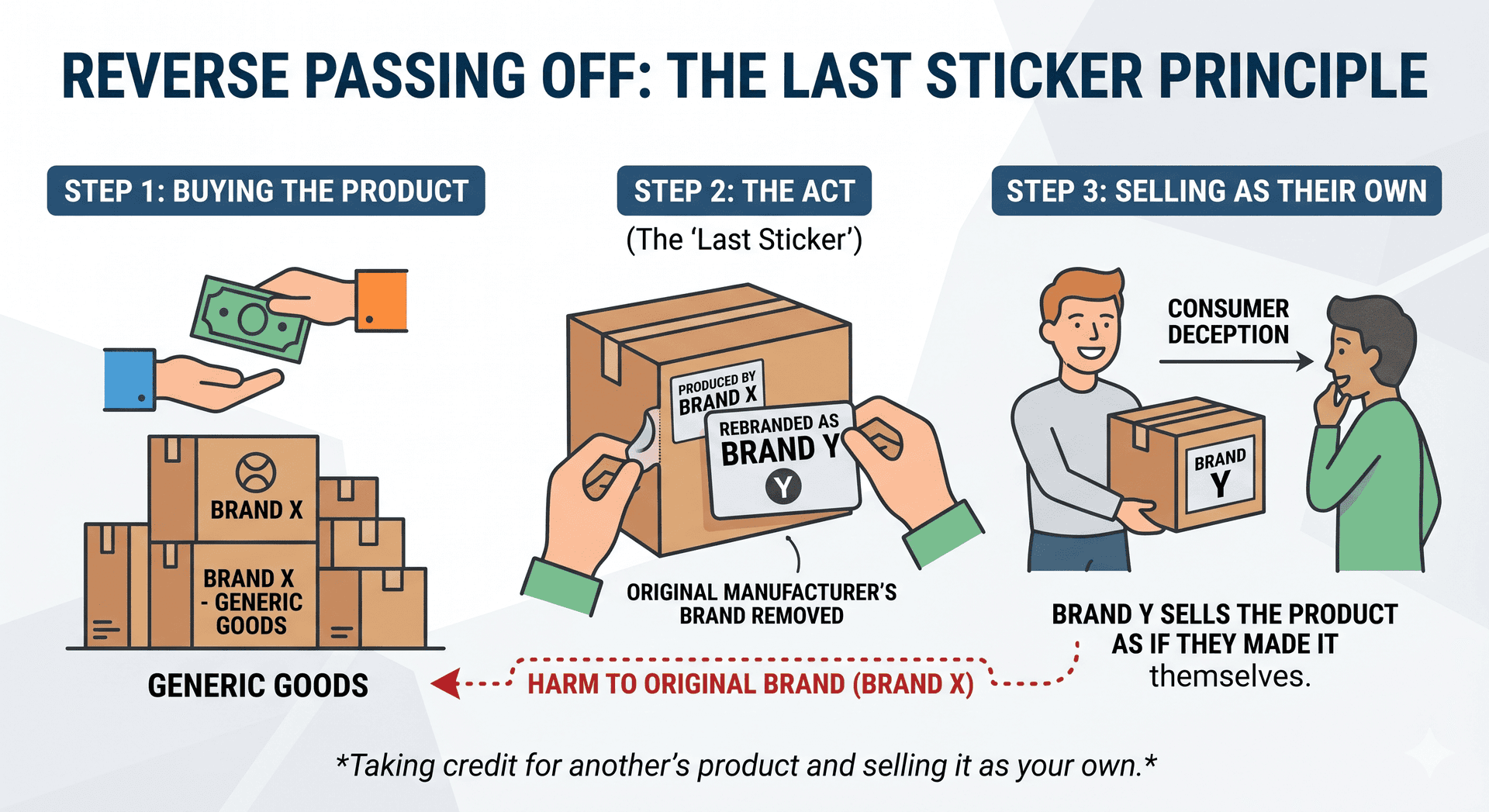
A case of passing off is made out when a person tries to free ride on the coattails of another’s reputation by pretending their goods as someone else. Reverse passing off flips the script— a reseller tries to appropriate someone else’s product as their own by scrubbing off the original maker’s name and gluing their own. Harm lies in the misrepresentation of the source. As elucidated by John T Cross, the wrong doesn't lie in copying someone's product, but in failing to give them credit. This doctrine is not a substitute for copyright or patent law but it’s about policing a simpler kind of dishonesty: misleading claims about the origin of goods.
The Western Digital and Seagate noticed that their hard disk drives were being imported and sold in the refurbished market. What happened was that end-of-life hard disks were removed from computers and imported and sold to Indian reseller players like Geonix and Daichi International, who then made necessary repairs and removed the original marks. Western Digital alleged this amounted to misrepresentation and reverse passing off. The issue is not entirely new, the court has previously dealt with Western imported devices sold in refurbished market. Earlier decisions discussed legality of resale and requirement of disclosure. This time when the court revisited the matter, it discussed reverse passing off. The court explicitly rejected this common law tort, holding that it has no bearing on Indian law. According to the court, Indian law only recognises traditional passing off and infringement covered under Section 29 and they can't take on the role of Parliament to legislate new law. It also solidified the concept of international exhaustion of trademark rights, which was recognised in the Kapil Wadhwa Case. According to this concept: the entire world is a single marketplace and right to a trademark is exhausted for a good when a person legally acquires it from the authorised proprietor. He can resell it on his own accord.
A doctrine abroad
Reverse passing off is not an unusual doctrine internationally. America recognises misattribution as a form of unfair competition. It is actionable under Section 43(a) of the Lanham Act in the context of deceiving consumers regarding the source of production. The American court in Smith V. Montoro highlighted a fundamental truth: the loss is the harm of the opportunity to capitalise on one’s reputation. An actor's name was removed from a film's credit and another's name was inserted. The Court held this to be a case of reverse passing off. When the Indian court said 'reverse passing off' is a foreign concept, it dismantled the protection that should be given to the original producers — who put in hard work and R&D. It's saying that the soul of a good doesn't belong to the creator once it hits the secondary market. A person can reap the fruit of another's goodwill by affixing their own name.
The unique case of refurbished market
Let’s be honest — refurbishment is the unsung hero of an unequal world. Not everyone can afford new technology, hence refurbished goods allow underprivileged people to keep up with emerging technologies. It further supports a large informal repair ecosystem which in turn boosts employment opportunities in the repair and servicing sector. Furthermore, electronic waste is a major pollutant and refurbishment prevents its premature discarding. It bridges the gap between technological obsolescence and environmental sustainability.
At the same time, placing the original trademark on refurbished goods may create misleading expectations. A brand in today's world is often equated with quality assurance, warranty and performance standards. Thus, the original mark could create a wrong impression and confusion in the minds of customers about the source of the product.
Beyond hard drives
While this ruling is a win for those selling and purchasing goods in Nehru Place, it creates a danger zone for other industries. A hard drive is usually hidden inside a computer. It is generally valued for its function and most people usually don’t care about its brand name. Fair enough. But consider a different kind of product — say, dead stock of Prada bag. If someone buys them and slaps their own brand logo on the bags, does the same logic hold? In the fashion industry, the brand is the product. In the context of the luxury market the brand is not just a label but the whole essence of the product. If reverse passing off is foreign to Indian law, then a seller could swiftly kidnap Prada’s reputation to build their own local brand.
Even if a seller puts a small note saying originally “made by Prada”, it still is problematic. The reseller is still using Prada’s decades of glory to make their own brand appear glamorous. This would result in ‘reputation hijacking’— allowing someone to establish themselves using someone else’s genius.
At the same time, the High Court decision is a victory for the ‘Right to Repair’ ecosystem. It keeps the technology cheap and keeps old parts out of the trash. The court’s middle path, requiring the seller to disclose the origin is a pragmatic step.
But we have to ask: what have we lost in the process? By applying the ‘Last Sticker Principle’, the court has implied that in India, a product’s identity is as deep as its label. India may have protected the ‘repair economy’ but the ‘innovation economy’ depends on recognising the creators behind products. At a time when India is trying to be a production hub, attribution should not disappear quietly. Until the law changes, we will be trapped in a market where you don’t need to be the creator to win, you just need to apply the last sticker.